
幸福来敲门Official video shows how PLA Army portable missiles, coordinated with air defense systems, can target stealth fighters_我的网站
一 | 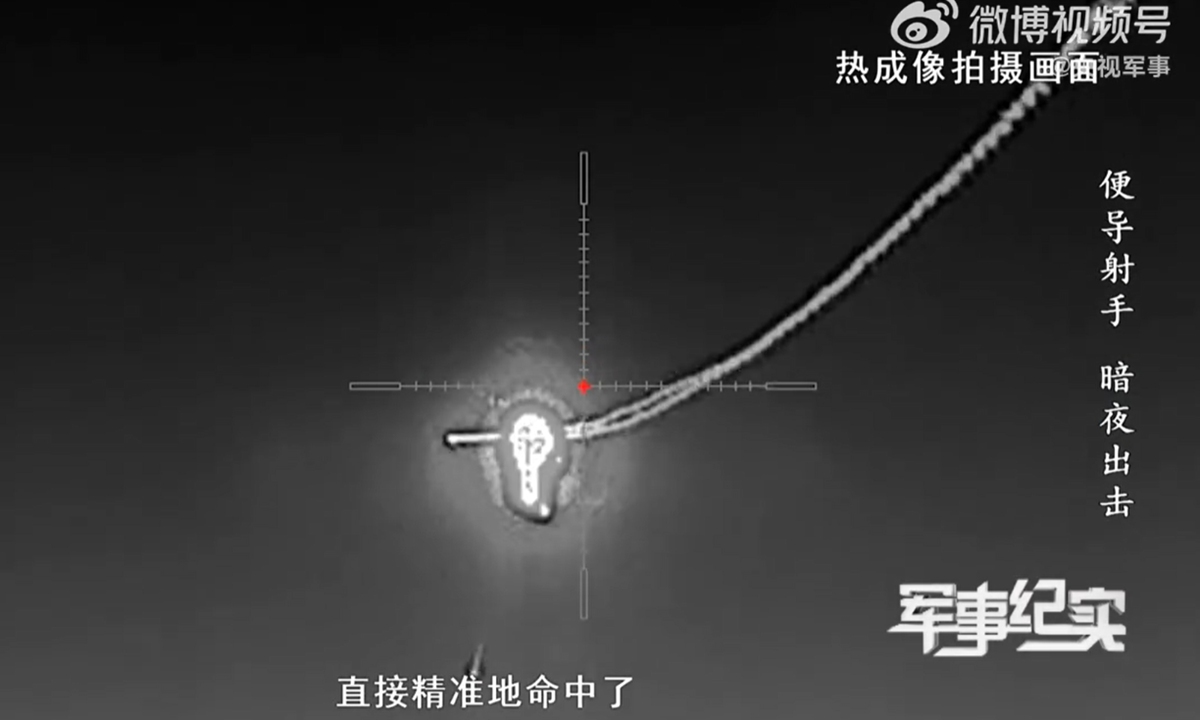 An expert said this example demonstrates the PLA's capability to counter high-value targets with low-cost equipment through systematic coordination, noting this tactic would be a good addition to the broader system of the PLA's anti-stealth capabilities. During the live-fire verification exercise featured in the CCTV News military channel video, teams conducted coordinated firing using man-portable air-defense systems (MANPADS) and HQ-16 air defense missiles. The HQ-16 engaged the majority of incoming targets, leaving the stealth fighter to the portable missiles. The video explained that in real combat, large air defense missiles are mostly radar-guided, but radar has difficulty detecting stealth fighters, which is precisely why stealth aircraft can operate with near impunity. Portable missiles, however, use infrared guidance that tracks heat sources, which can actually increase the probability of detecting such targets. The use of infrared guidance to strike stealth aircraft also drew attention in early 2026. In March, Iran reportedly shot down an F-35 fighter, with analysis suggesting that Tehran likely used infrared detection technology to hit the aircraft, challenging the myth of the F-35's stealth invincibility. However, using portable missiles to shoot down stealth fighters is no easy task, said the CCTV video. Due to their much shorter range compared with large air defense missiles, the operators must quickly move to positions where the stealth fighter is likely to appear and launch the missiles when the aircraft is closest to them. Moreover, this type of engagement requires extremely high synchronization between the two operators. Since portable missiles are infrared-guided and highly sensitive to heat sources, if the launches are not synchronized, the later missile might lock onto the earlier one as a target, the video explained. The video noted that the two operators had been conducting synchronization training and are now fully ready. Upon command, two missiles streaked across the night sky and simultaneously struck the target drone with precision. The portable missile unit's flawless performance marked the completion of its first experimental tactical exercise, making it possible to use portable missiles against stealth fighters on future battlefields, commented the video. This coordinated drill demonstrates that through proper coordination within the air defense system, low-cost equipment can indeed unlock new combat value and pose a certain counterbalance to high-value stealth targets, Song Zhongping, a Chinese military affairs expert, told the Global Times on Sunday. To detect stealth targets, the HQ-16 field air defense system requires multiple detection units to conduct continuous, uninterrupted scanning of the same direction. This multi-static array deployment can exploit loopholes in stealth, such as the fact that stealth is not omnidirectional. Therefore, making use of multi-directional detection can increase the probability of finding a target. Portable missiles, meanwhile, serve as an important supplement to the radar-guided system. The combination of the two can indeed engage stealth targets, Song explained. Song also noted that this shows the mature nature of the PLA's data link and information fusion systems. However, as the video shows, this is no easy feat, it requires a high degree of coordination and skilled operational techniques. The expert also emphasized that using portable missiles against stealth fighters is just one part of the PLA's anti-stealth system. There are other non-MANPADS infrared-guided missiles and other guidance mechanisms that also contribute to anti-stealth capabilities. Anti-stealth capability development is a multi-channel, multi-dimensional systems engineering effort. At the detection level, in addition to multi-band radar deployment, other technical approaches include passive radar, lidar and future quantum radar, all of which can effectively detect and lock onto stealth targets. Meanwhile, airborne early warning aircraft represent another critical component of the PLA's anti-stealth capability, providing surveillance and command guidance over a wider airspace, Song said. This multi-dimensional integrated anti-stealth capability is a key direction for future air defense system development, Song added. 。 为此Intel成立了新的IFS晶圆代工部门,已经服务部分客户,这两天Intel CEO基辛格又宣布了新的代工模式——内部代工模式(internal foundry model),这个模式不仅会给外部代工客户使用,Intel自己的产品也会使用这种方式来生产。
二 | Intel表示,相比传统的晶圆代工只能提供芯片制造或者多加一个封装的模式,Intel的内部代工模式会开放四大技术,分别是制造、封装、软件和芯粒(注:芯粒就是之前所说的小芯片设计的正式名字)。Intel官方公众号今天还做了详细的解释,四种技术的含义如下:第一,晶圆制造。Intel继续积极推进摩尔定律,向客户提供其制程技术,如RibbonFET晶体管和PowerVia供电技术等创新。
三 | Intel正在稳步实现在四年内推进五个制程节点的计划。第二,封装。Intel将为客户提供先进封装技术,如EMIB和Foveros,以帮助芯片设计企业整合不同的计算引擎和制程技术。
四 | 第三,芯粒。这些模块化的部件为设计提供了更大的灵活性,驱动整个行业在价格、性能和功耗方面进行创新。Intel的封装技术与通用芯粒高速互连开放规范(UCIe)将帮助来自不同供应商,或用不同制程技术生产的芯粒更好地协同工作。第四,软件。
五 | Intel的开源软件工具,包括OpenVINO和oneAPI,加速了产品的交付,使客户能够在生产前测试解决方案。总之,在芯片代工行业,目前台积电及三星走在了前列,但是Intel野心勃勃,对这个市场也是志在必得,抢三星及台积电的份额是注定的,这次的内部代工模式也是他们的杀手锏,能提供更多的附加服务,随着Intel新一代的3nm、20A及18A工艺在未来一两年量产,Intel对其他两家的威胁会越来越大。 Current article:http://xfcb0iv.cousizhegaobaolengkuo.bond/list_97grm/3spl.html Published on:14:49:07 |


